
Treatment
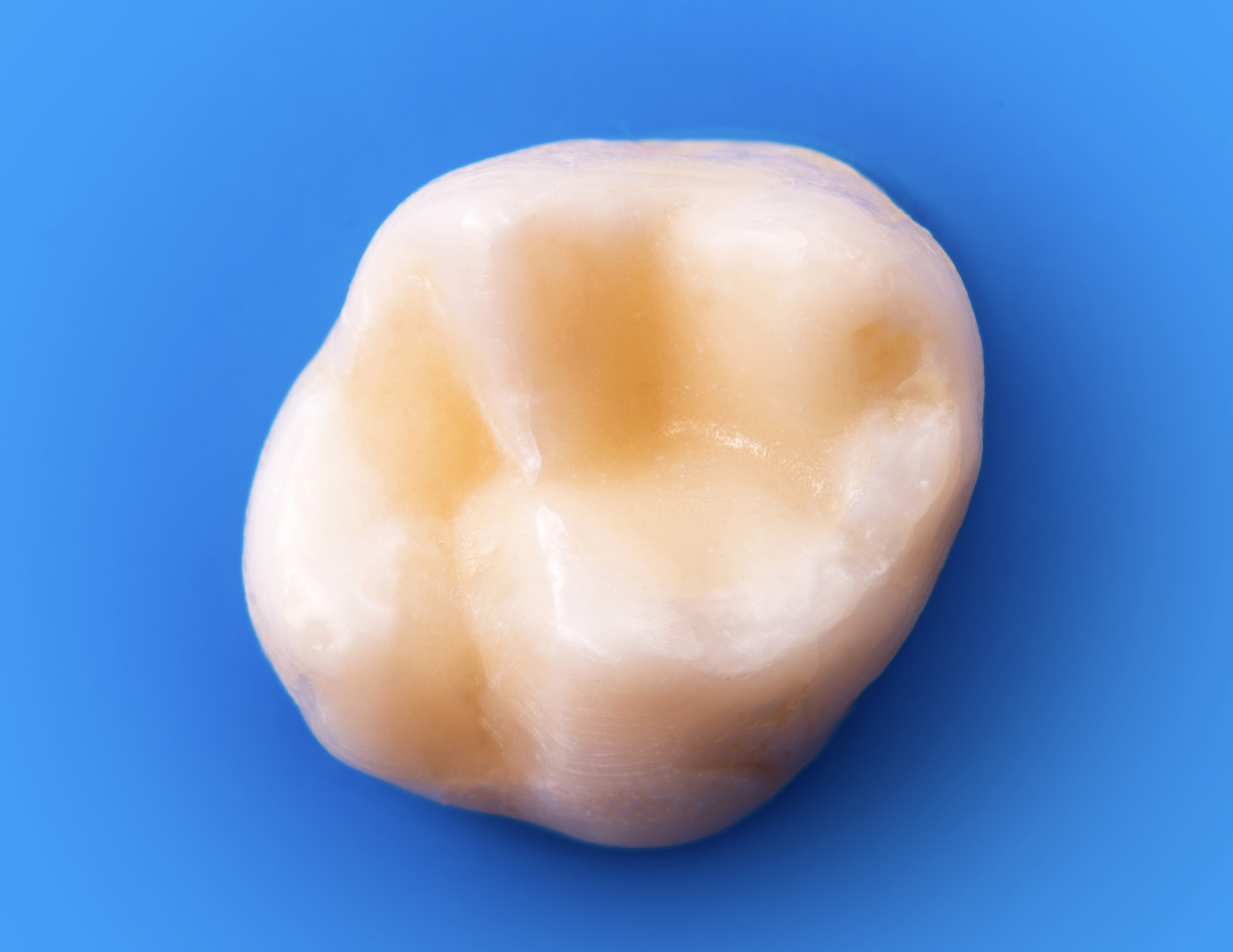
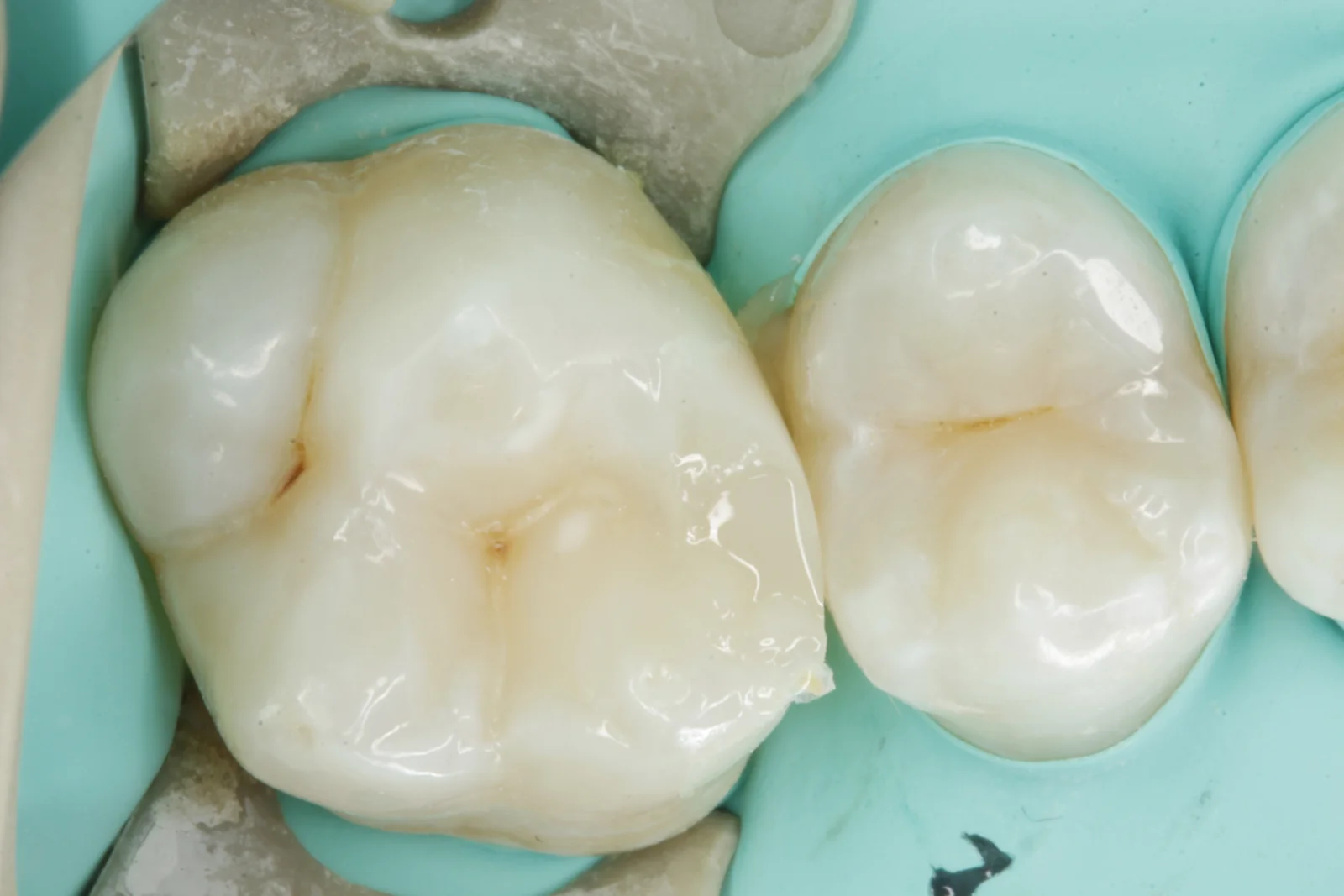
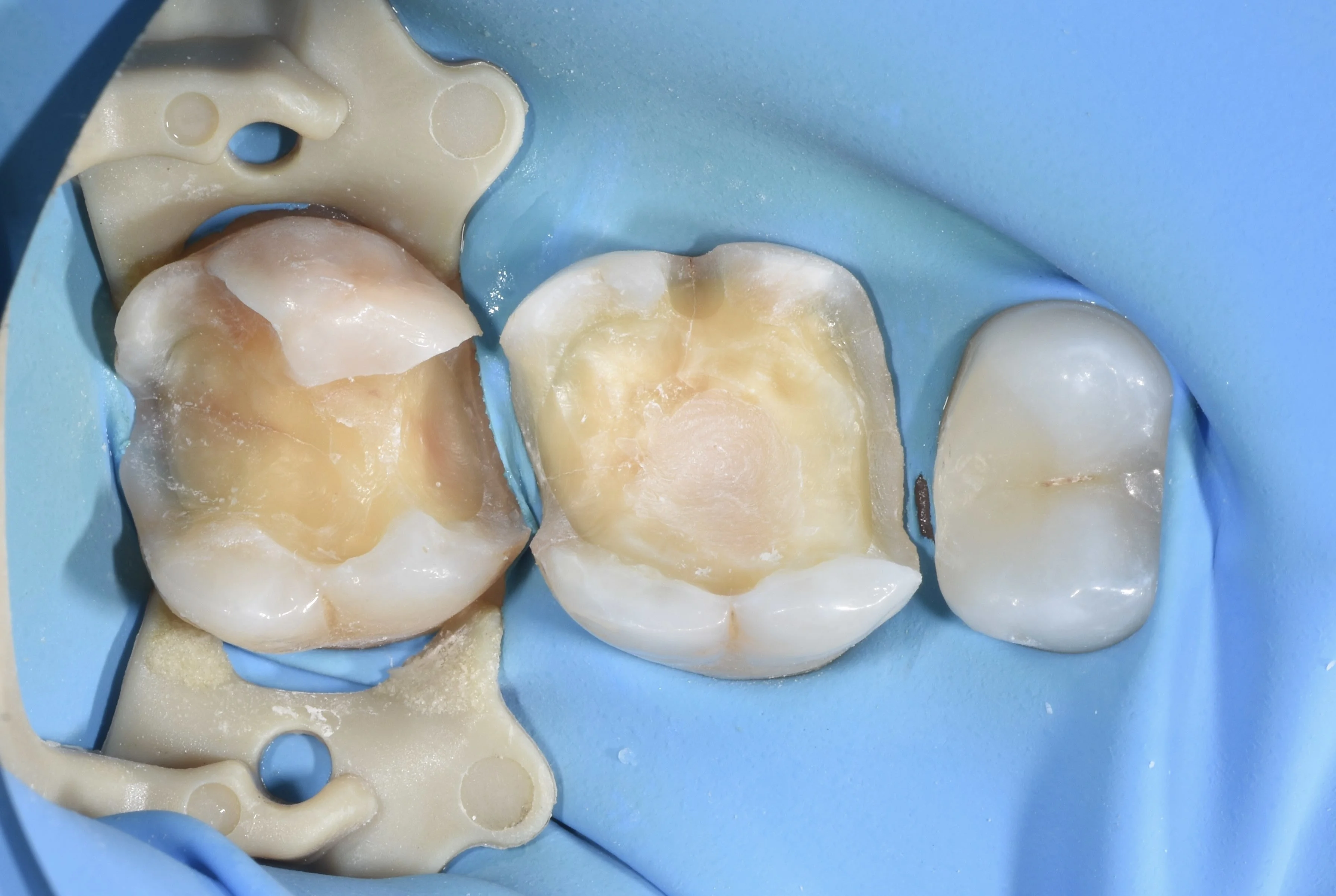
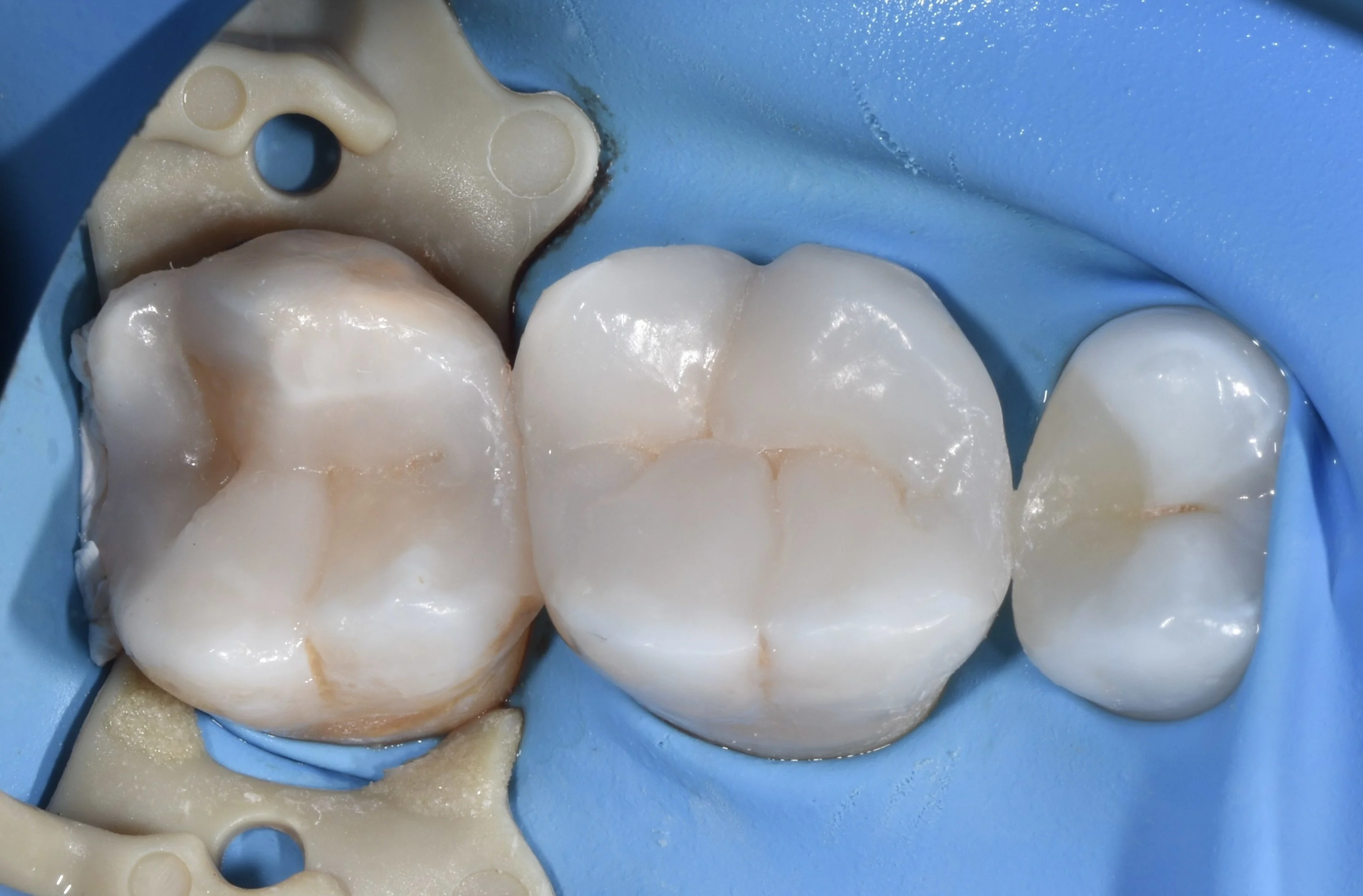
White dental fillings – aesthetic and durable fillings indistinguishable from your own teeth.
- Treatment under microscope with 32× magnification.
- Painless and fast – done in 45 minutes.
- Natural appearance and perfect shape.
Tooth decay is one of the most common diseases of the oral cavity. It affects both children and adults, and if left untreated, it can lead to tooth loss. The good news is that with regular care and timely treatment, it can be prevented and its consequences significantly mitigated.
Tooth decay in children is particularly risky because it can affect the development of permanent teeth. Do not rely on baby teeth falling out and always being replaced by healthy permanent teeth.
Removing small cavities in time
This is a minor and affordable procedure that can be completed in one visit in about 45 minutes, starting at CZK 2,500. The tooth is more stable and the filling can last a lifetime.
Removing large cavities when it is too late
A more extensive procedure may require nerve anaesthesia, root canal cleaning and the fitting of a crown, which means 3-4 visits of 90 minutes each and a price up to 5-10 times higher than for a standard white filling. A weakened tooth is fragile, may crack and, in the worst case, you may lose it completely.
How to recognise tooth decay?
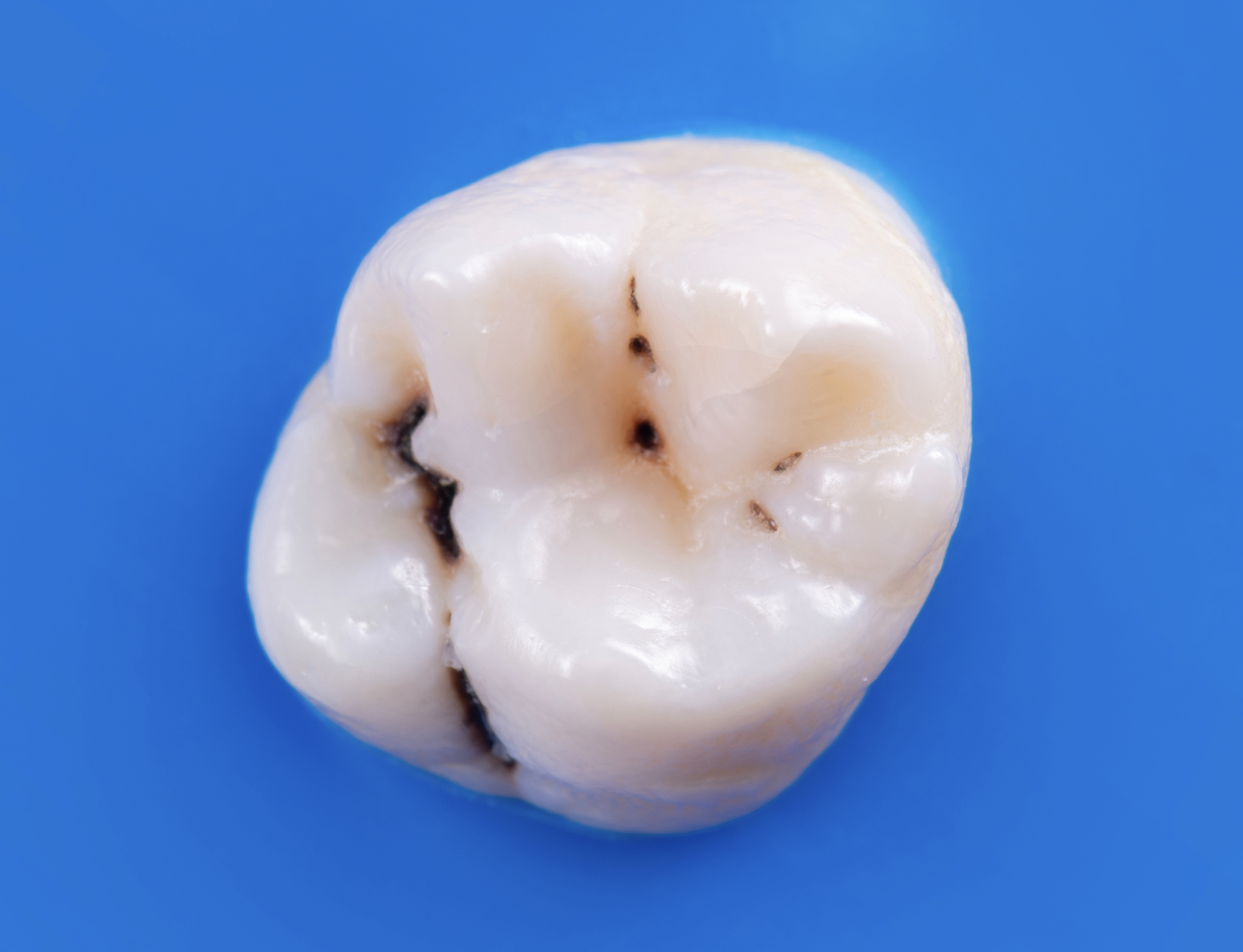
Some forms of tooth decay are easily visible, while others can only be detected by a highly specialised examination.
- Sensitivity to cold – if your tooth reacts to cold drinks or food with sharp pain, this often indicates the onset of tooth decay. In such a situation, treatment and a filling are usually necessary to prevent further damage to the tooth.
- Sensitivity to heat - when pain is caused by hot food or drink, this usually indicates more advanced decay. In such cases, the dental pulp is also affected and nerve inflammation may develop.
- Sensitivity when biting - pain that occurs when biting or chewing is also a sign of more extensive decay. This is often the first sign that the nerve inside the tooth is beginning to become inflamed.
- Pain out of nowhere (even at rest) - if the pain occurs on its own, without contact with food or drink, it means that the decay has already penetrated the nerve. In such cases, root canal treatment, known as endodontics, is necessary.
- The pain persisted and then suddenly disappeared - a tooth that has been hurting for two weeks and now no longer hurts may not be "cured". On the contrary, it is highly likely that the nerve has died and the tooth is dead. Here, too, endodontic treatment is necessary, i.e. removal of the remaining nerve from the tooth, otherwise there is a risk of further complications in the form of bone inflammation.
The most common methods of treating tooth decay
If tooth decay is detected early, treatment can be simpler and less invasive. That is why regular visits to the dentist are important, so that decay can be detected and treated as soon as possible.
Dental fillings
The treatment of tooth decay most often consists of removing the part of the tooth affected by tooth decay, which is then filled with a suitable filling material (e.g. composite white filling, ceramic filling, amalgam or gold filling).
Crown
If the tooth is already significantly damaged by decay, a filling alone is not enough. In such cases, it is necessary to restore the original shape and strength of the tooth using a ceramic crown. The crown acts as a solid "cover" that covers the entire visible surface of the tooth and protects the remaining healthy tissue from further cracking or breaking.
Endodontics (root canal treatment)
If the decay has already progressed to the dental pulp, it is necessary to clean the dental canals, during which the affected nerve is removed, the root canal is cleaned and then sealed.
How do we proceed when making a white dental filling?
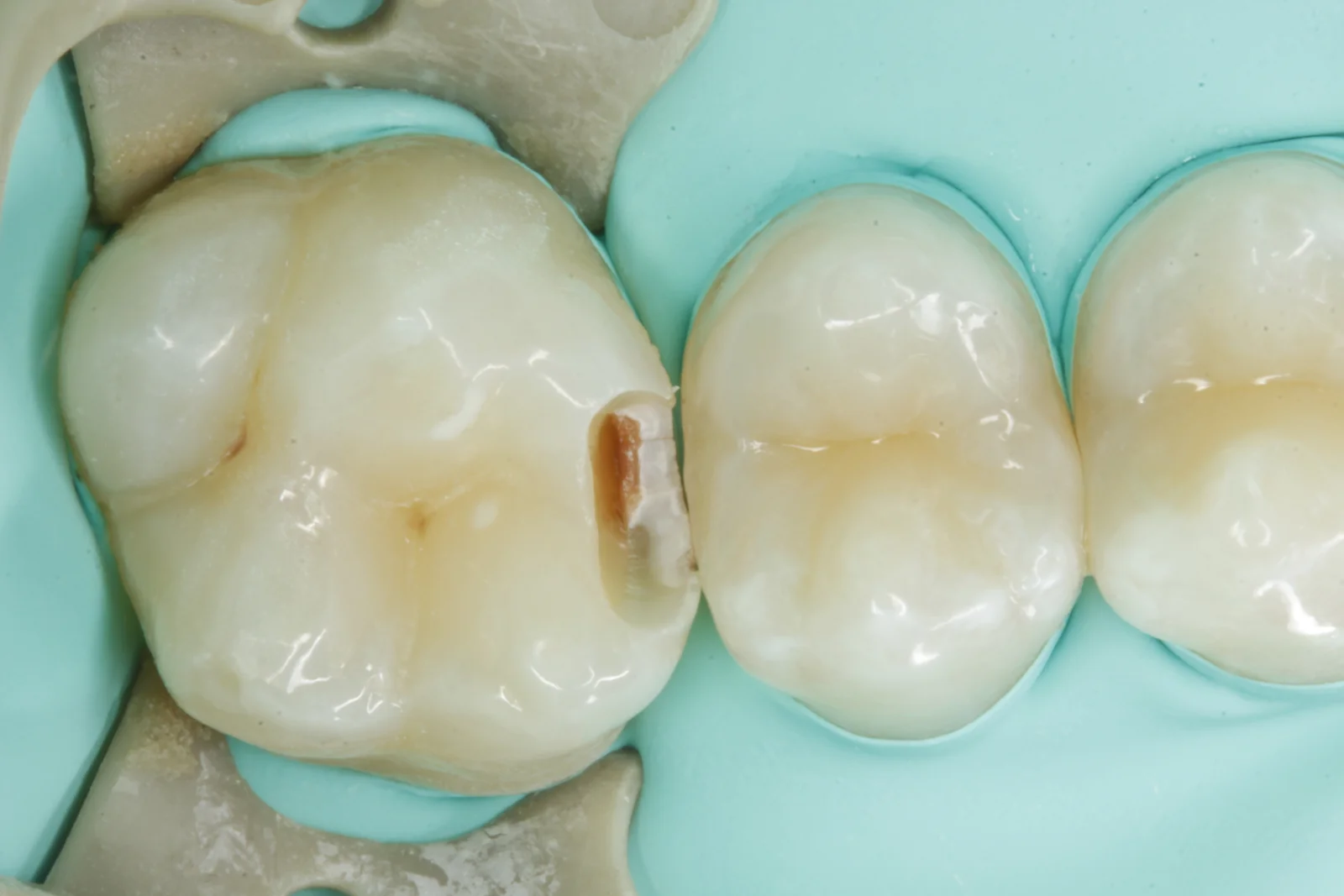
- Examination and diagnosis: at the beginning of the procedure, our specialist will perform a thorough examination of the affected tooth to determine the extent of the damage. This includes a visual inspection, palpation and, if necessary, X-rays to help determine the depth of the decay and other details.
- Local anaesthesia for painless treatment: to ensure maximum comfort and eliminate pain during treatment, we apply local anaesthesia. This anaesthesia numbs the affected area, eliminating any discomfort.
- Removal of decay and cleaning: we then remove all decay and debris from the affected tooth using special instruments. This stage is essential to ensure that the filling is of high quality and long-lasting.
- Preparing the tooth for the filling: in some cases, especially with certain types of fillings, it may be necessary to gently adjust the tooth so that the filling adheres better. This may involve cutting away a small amount of healthy tissue around the edge of the decay.
- Isolation of the tooth: to ensure optimal conditions for the application of the filling, we isolate the tooth using a rubber dam or rubber band. This isolation prevents saliva or other fluids from entering the treated area, which could affect the quality of the filling.
Why choose our clinic for dental fillings?
- We detect all cavities – thanks to modern equipment (Carl Zeiss dental microscope, 3D X-ray, CBCT) and experienced dentists specialising in the treatment of dental cavities, we do not miss even the smallest cavity.
- Drilling does not hurt – local anaesthesia in the upper and lower jaw always works reliably and ensures comfortable treatment, during which you can even fall asleep.
- We see more – we perform the entire treatment (caries removal and white filling) under an operating microscope with up to 32x magnification and special LED lighting.
- Nothing will bother you – do you know that feeling when you leave the dentist and something bothers you in your mouth? No more "it will settle in". Our fillings are perfectly shaped to fit your bite.
- Invisible and natural – aesthetic white fillings are indistinguishable from your own teeth and blend perfectly with the surrounding enamel.
- No food getting stuck – with our fillings, food will not get stuck between your teeth. They are precise, functional, easy to clean and therefore hygienic.
Indicative Prices
Prices are indicative. We will tell you the exact price after examination. Full price list →
Gallery
Share
How to remove tooth decay at home?
Tooth decay is one of the most common oral diseases. It is important to know that tooth decay cannot be cured on your own.
Read more →How much does a white filling cost?
Modern white (composite) fillings are an aesthetic and gentle solution for tooth decay.
Read more →Untreated tooth decay – what are the risks?
If detected early, its treatment is quick, gentle and usually painless. However, untreated tooth decay can quickly become a serious problem.
Read more →What types of dental fillings are there?
A dental filling is the most common treatment for tooth decay. Today, there are several types of fillings available.
Read more →How is a dental filling (dental sealant) made?
The process of making a dental filling varies depending on the type of filling and the specific needs of the patient.
Read more →How to recognise tooth decay?
Some forms of tooth decay may be easily visible, while others can only be detected by a professional examination.
Read more →When is it necessary to replace a filling?
Read about when it is necessary to replace a filling.
Read more →What does early tooth decay look like?
Early tooth decay is usually the first stage of tooth decay, when enamel demineralisation occurs.
Read more →I have tooth decay
Tooth decay is one of the most common oral health problems affecting people of all ages.
Read more →