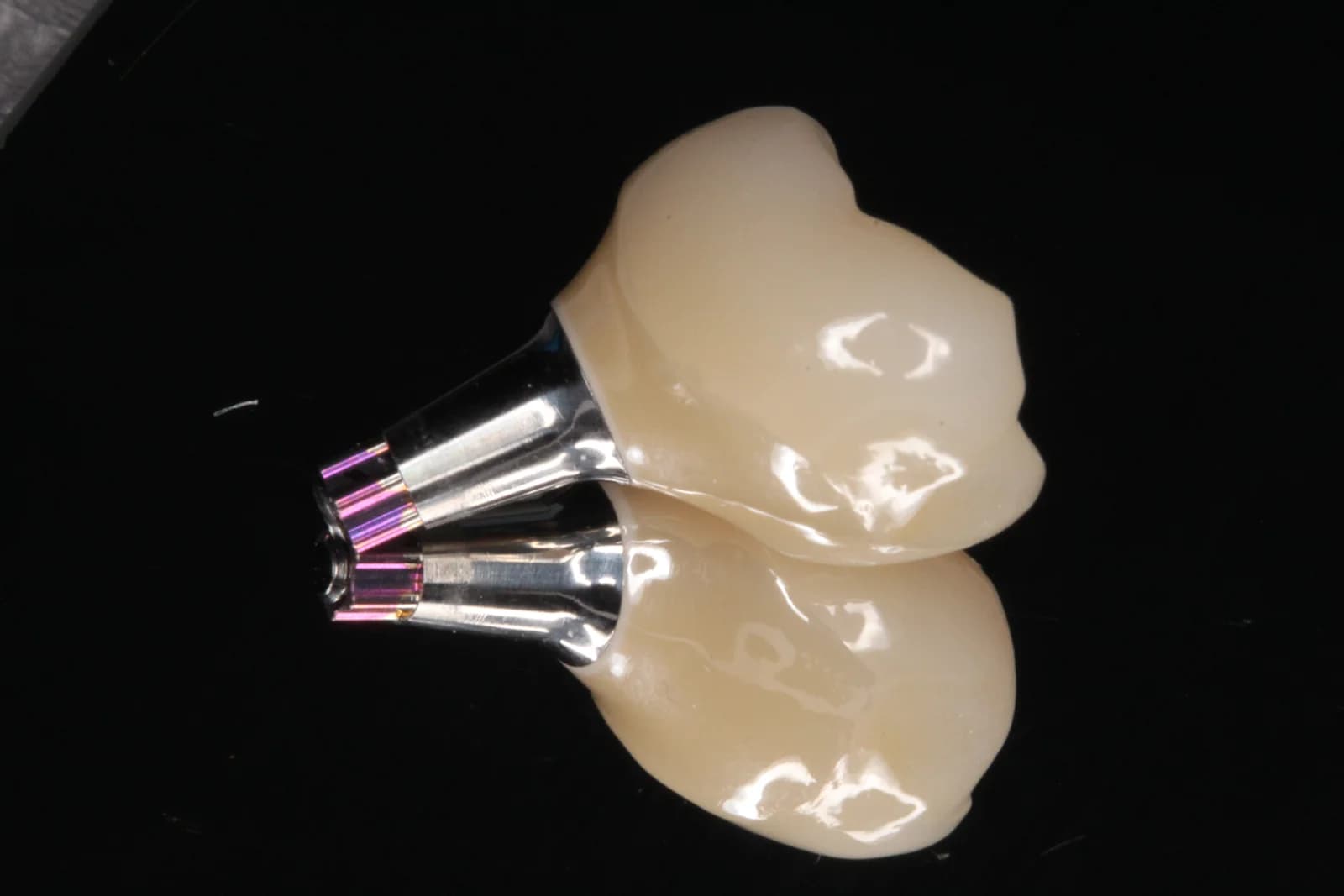
Treatment
Dental crown – strong protection and a natural look for a damaged tooth.
- Ceramics and zirconia for a perfect result.
- Digital 3D scan without unpleasant impressions.
- Painless treatment under local anaesthesia.
Dental crowns as a permanent solution for damaged teeth
A dental crown is a custom-made fixed replacement that covers the visible part of the tooth and restores its shape, strength and natural appearance. It makes sense when a tooth is weakened, significantly damaged by decay or injury, or after endodontic treatment. A crown protects the tooth from further damage, improves your bite and significantly increases comfort when chewing and speaking.
At our clinic, we use modern materials such as ceramics and zirconium and work with digital 3D scanning. This allows us to design the crown precisely according to the anatomy of your teeth, match its colour to the surrounding teeth and achieve a result that looks natural and lasts for a long time.
Why not put off getting a dental crown
- It protects a weakened tooth and helps prevent cracking or further damage.
- It restores proper dental function so you can eat and chew normally without worry.
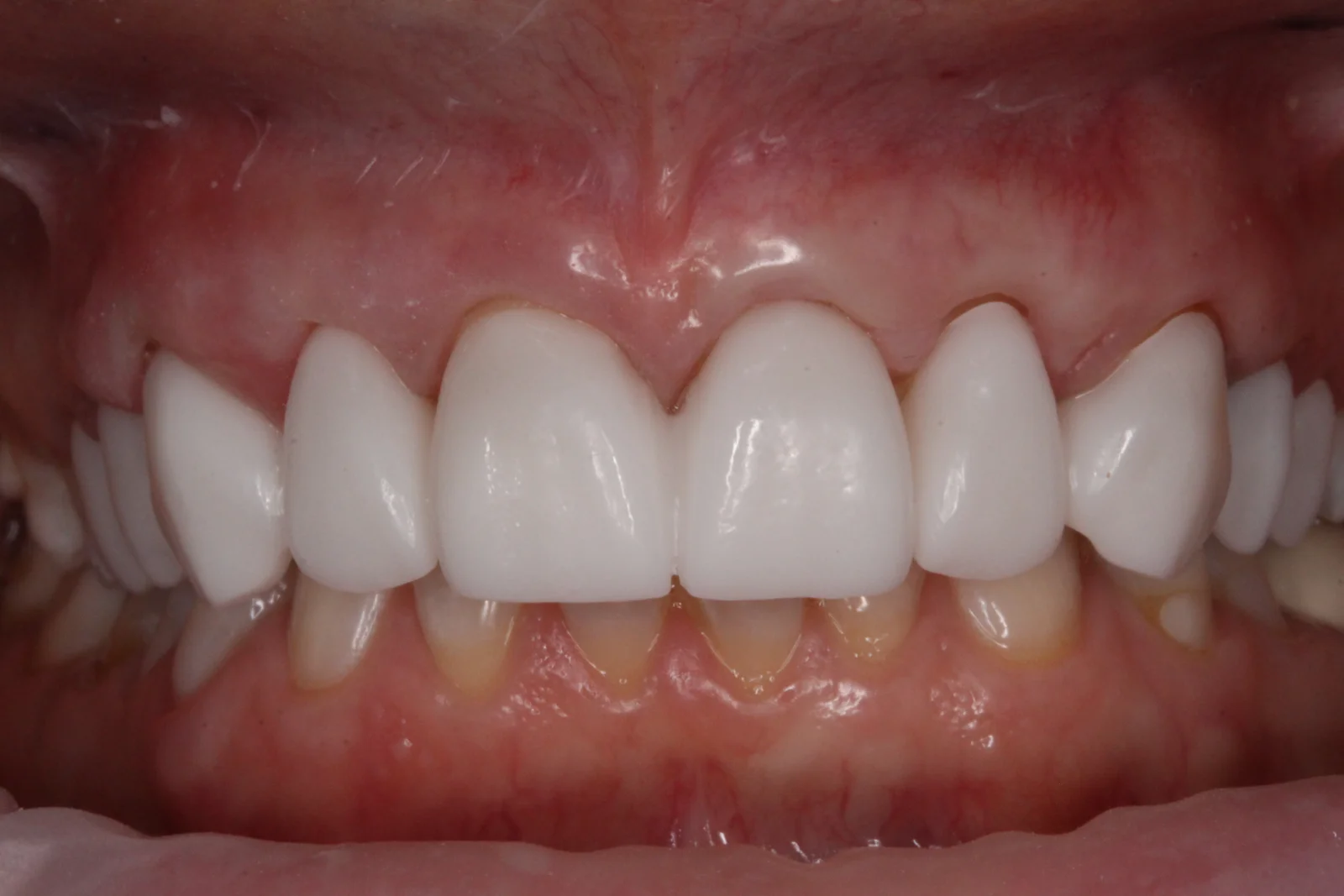
- It improves the aesthetics of your smile, as the crown copies the shape and shade of your natural teeth.
- It increases long-term comfort – a crown is a strong and stable replacement.
Dental crown materials and how to choose the right option
The choice of material depends on the location of the tooth, the load and aesthetic requirements. We most often work with ceramics and zirconium, as they offer a very good balance of aesthetics, strength and durability.
- Ceramic crowns are often chosen where the most natural appearance is important.
- Zirconium crowns are very strong and durable, and are also suitable for areas with higher stress.
How a new dental crown is made or an old one replaced
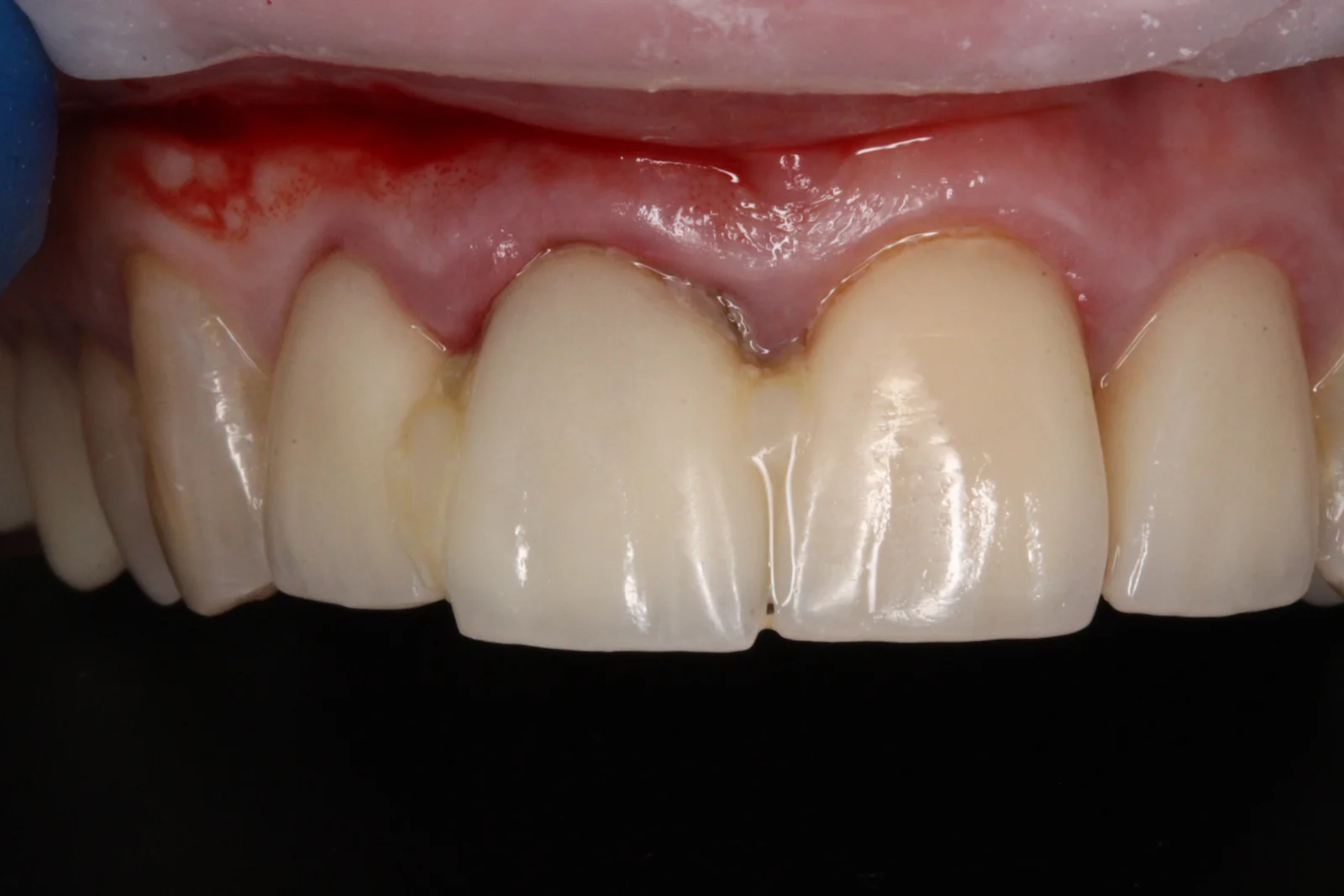
If you already have a crown, the dentist will first carefully remove it. They will check the condition of the tooth underneath and the surrounding tissues and suggest a procedure to ensure that the new crown fits properly, functions well and does not put strain on the bite.
- Examination and preparation of the tooth: the condition of the tooth is assessed and, if necessary, treatment is added to make the tooth stable and secure.
- Digital 3D scan: the tooth prepared for the crown is scanned, and the digital impression helps to achieve high accuracy.
- Temporary crown: before the final ceramic crown is ready, the patient will receive a temporary crown to protect the tooth and allow it to function normally.
- Placement of the new crown: the final crown is adjusted in terms of colour and shape, tried in the mouth and then firmly bonded with fixing cement.
- Checking the bite and comfort: it is verified that the crown fits properly, does not interfere with chewing, and the patient feels comfortable.
Comfort and painless treatment
The treatment is performed under local anaesthesia and the aim is maximum comfort. Thanks to digital scanning, there is no unpleasant pressure from traditional impressions and the crown is designed with an emphasis on precise fit and natural contact with adjacent teeth.
A dental bridge as a follow-up option when a tooth is missing
If a tooth is missing completely rather than partially, a dental bridge may be a suitable alternative. A bridge is a fixed replacement that restores the aesthetics and function of the teeth while helping to prevent the surrounding teeth from shifting. During the consultation, we will always assess whether a crown, bridge or other solution is more suitable for you.
Recommendations after crown placement
- On the first day after treatment, do not bite hard foods on the treated side.
- Maintain careful oral hygiene, especially at the transition between the crown and the gums.
- Use interdental brushes and dental floss.
- Go for check-ups at least twice a year, ideally together with dental hygiene.
Frequently asked questions before having a crown fitted
- Does getting a dental crown hurt? No, the procedure is performed under local anaesthesia. The patient usually only feels pressure.
- How long does a crown last? The lifespan is influenced by the material, bite, hygiene and regular check-ups. With proper care, it is a long-term solution.
- What is the difference between ceramic and zirconium? Ceramic emphasises aesthetics, while zirconium adds high strength. The choice is made according to the specific situation.
- When is a bridge better than a crown? A crown treats a tooth that is in place, while a bridge is used when a tooth is lost, provided there is adequate support on the adjacent teeth.
Indicative Prices
Prices are indicative. We will tell you the exact price after examination. Full price list →
Gallery
Share
Loose dental crown – what to do and how to prevent complications
In exceptional cases, even a firmly attached crown can become loose due to biting, cement wear or damage to the tooth to which it was attached.
Read more →What are dental crowns?
Dental crowns are fixed prosthetic replacements that replace the visible part of a damaged tooth.
Read more →What is a CEREC crown?
A CEREC crown is a modern type of dental crown manufactured using digital technology directly in the dentist's office during a single visit.
Read more →Which teeth are suitable for CEREC technology?
Thanks to modern CEREC technology, we can replace or cosmetically improve various parts of your teeth in a single visit.
Read more →What are the advantages of CEREC dental crowns?
Dental restoration using the CEREC system offers a number of advantages.
Read more →When is it not advisable to undergo CEREC treatment?
CEREC treatment is not always suitable for everyone, and there are certain cases where another treatment method should be chosen.
Read more →How does CEREC treatment work?
CEREC treatment is a revolutionary method that allows you to restore damaged teeth in a single visit to the dentist.
Read more →