Share
Crooked teeth trouble up to 80% of Czechs
Crooked teeth, crowded dentition, or incorrect bite trouble up to 80% of the Czech population according to expert estimates. For most people, these are milder deviations that do not significantly impair the aesthetics of the smile, but for a significant portion, orthodontic defects are so pronounced that they affect chewing, speech, and self-confidence. Modern orthodontics today offers solutions for practically every age and type of defect.
Evolution and bad habits
One of the main reasons why orthodontic defects occur so frequently is evolutionary development itself. Human jaws have gradually become smaller over millennia, while teeth remain approximately the same width. The result is a lack of space, crowding of teeth, and irregular eruption. This is compounded by childhood bad habits, such as prolonged pacifier use, thumb sucking, mouth breathing, or improper swallowing. Early loss of primary teeth also plays a role, as neighboring teeth shift and the permanent tooth then lacks sufficient space.
Braces as a solution
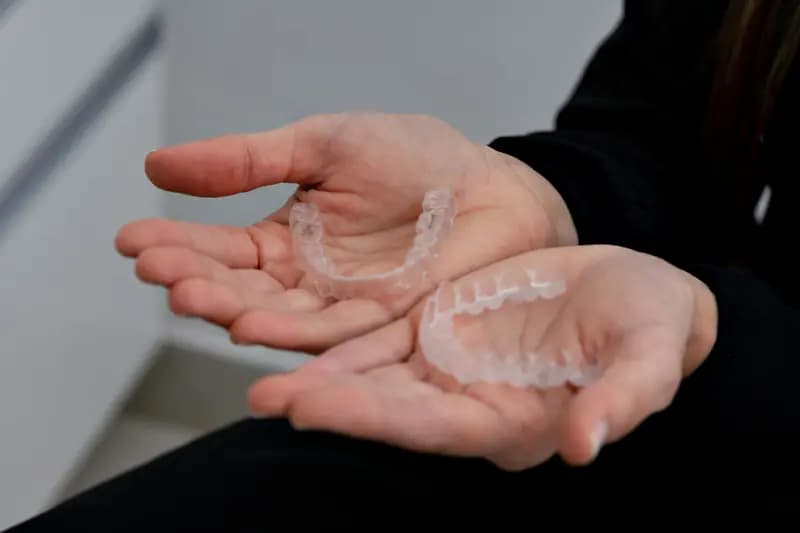
Contemporary orthodontics offers a wide range of braces. Classic fixed braces with metal or ceramic brackets remain the most effective solution for more complex defects — they work continuously and can handle even demanding tooth movements. For patients who prefer a more discreet option, invisible braces in the form of transparent foils (aligners) are available. These are easily removed when eating and brushing teeth and are practically unnoticeable. The suitability of a specific type of braces is always assessed by an orthodontist after a thorough examination. Treatment typically lasts one to two years, and its results last a lifetime — provided the patient wears the recommended retainer after the braces are removed.
This article is for informational purposes only and does not replace an in-person examination. If you have a specific concern or question, get in touch with our team — we will be happy to invite you for a consultation.


Last updated: