
Treatment
Endodontics – we will save your tooth with microscopic root canal treatment.
- Treatment under Carl Zeiss microscope.
- Painless under local anaesthesia.
- The last chance before tooth extraction.
The aim of endodontic treatment is to preserve your own tooth, which has been damaged by deep decay, inflammation or poor-quality treatment in the past. Endodontics is often the last option to save a tooth from extraction. If the condition of the tooth allows it, our specialists will help you avoid replacement with an implant.
When do we perform microscopic endodontics?
We perform endodontic treatment when the dental pulp is damaged by decay or trauma and is dying, or has been dead for a long time. You will often encounter terms such as dead tooth or root inflammation, or a pocket above the root. Treatment only makes sense if the tooth is strong, has sufficient healthy tissue and the root is not cracked. If the root is cracked or the tooth is structurally unsound in the long term, we will tell you openly that saving it does not make sense and recommend further treatment.
If the decay is not treated in time, bacteria will penetrate the pulp cavity and may cause pain and a more extensive infection that affects the root system. If the infection worsens, it can spread to the jawbone and the body reacts with inflammation, often described as a dental abscess. The next stage may be a cyst in the bone cavity. In some cases, this can lead to the need for tooth extraction. Modern microscopic endodontics often allows the condition to be treated before it develops to this stage.
Endodontics may also be appropriate after a tooth injury. We sometimes recommend it as preparation before making a bridge or crown, if the condition of the tooth requires it.
I'm coming from the dentist or the emergency room
If you are looking for treatment or cleaning of root canals under a microscope and your dentist has referred you, or you are coming from the emergency room, you have come to the right place. Endodontic cases often require precision, experience and equipment that is not always available in regular practice.
How we can help you
- Root canal cleaning for teeth with damaged or dead pulp.
- Re-endodontics, i.e. re-treatment of poorly filled canals from the past.
- Removal of broken instruments from teeth.
- Treatment of root inflammation, including root abscesses.
- Root resection, if this is the best solution for saving the tooth.
It is painless
We remove the nerve from the tooth or re-treat the canals under local anaesthetic. The aim is to make the procedure as comfortable as possible for the patient. If you are concerned about the procedure, we will adapt the process to make it as pleasant as possible for you.
Why treatment under a microscope
The interior of a tooth is difficult to see without a microscope. The diameter of a root canal can be around 0.4 mm, and the canals are often intertwined, branched and irregular. Thanks to microscopic treatment, we have a detailed overview of the root canals and can treat them more precisely.
The microscope helps to detect poorly treated canals, broken instruments, infections and the complex anatomy of individual canals. At the same time, it can detect minor deficiencies that may affect the outcome of treatment, such as leaks, imperfect fillings or incipient problems in surrounding structures.
Endodontics and re-endodontics
Cleaning the canals is called endodontics. If it involves re-cleaning and refilling the canals after previous treatment, we refer to it as re-endodontics. Repeated treatment is more demanding because it is necessary to remove the old filling material, find and clean all the canals, and resolve any complications.
Our specialists, endodontists Dr. Daniel Ott and Dr. Jakub Hladik, always strive to design a procedure that gives the tooth the best chance of long-term survival.
How root canal cleaning (endodontics) works step by step
- Examination and diagnosis: we assess the tooth, take X-rays and explain whether the tooth can be saved.
- Anaesthesia: the treatment is performed under local anaesthesia.
- Tooth isolation: we isolate the tooth so that saliva cannot get into it and the procedure can be performed in a clean environment.
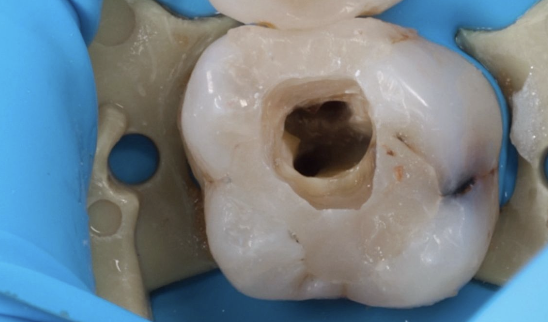
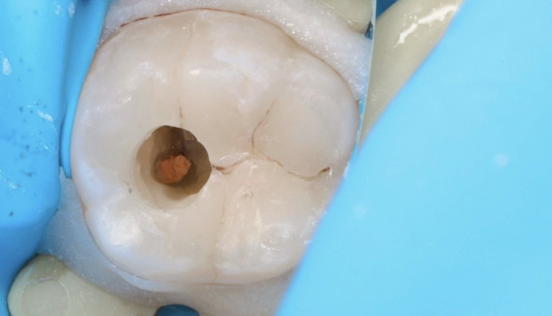
- Work under a microscope: we locate the root canals, clean them, disinfect them and prepare them for closure.
- Filling the canals: we hermetically seal the canals to minimise the risk of infection returning.
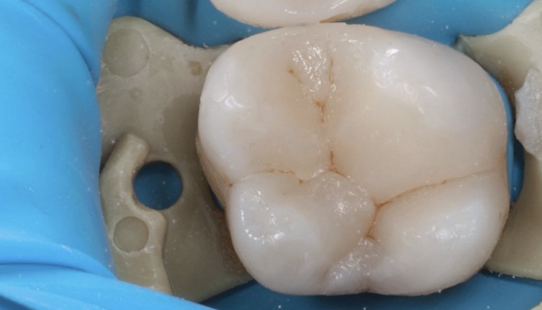
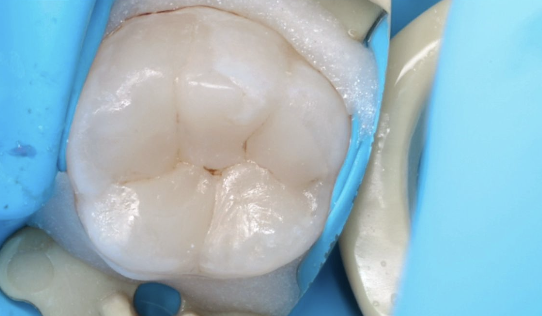
- Temporary or permanent closure of the tooth: depending on the situation, the tooth is closed temporarily or a permanent reconstruction is planned immediately.
What is important after endodontic treatment?
After endodontic treatment, the tooth is usually weakened and needs to be protected for a long time. In most cases, we recommend crowning the tooth to prevent it from cracking and to keep it fully functional. Don't worry, the crown can look natural and match your other teeth.
We use state-of-the-art equipment
- 3D X-ray and Carl Zeiss surgical microscope for maximum precision.
- Thorough disinfection and cleaning of the canals to remove bacteria and reduce the risk of infection recurrence.
- Gentle removal of damaged nerve tissue under local anaesthesia.
- Biocompatible materials for safe and tight sealing of the canals.
Success and why precision is important
In cases of poor-quality treatment, it is sometimes necessary to re-treat the canals, i.e. perform re-endodontics. That is why we perform endodontic treatment with the help of modern diagnostics and a microscope, which increase accuracy. If the treatment is performed to a high standard and the tooth is subsequently reconstructed correctly, it can last for many years.
Indicative Prices
Prices are indicative. We will tell you the exact price after examination. Full price list →
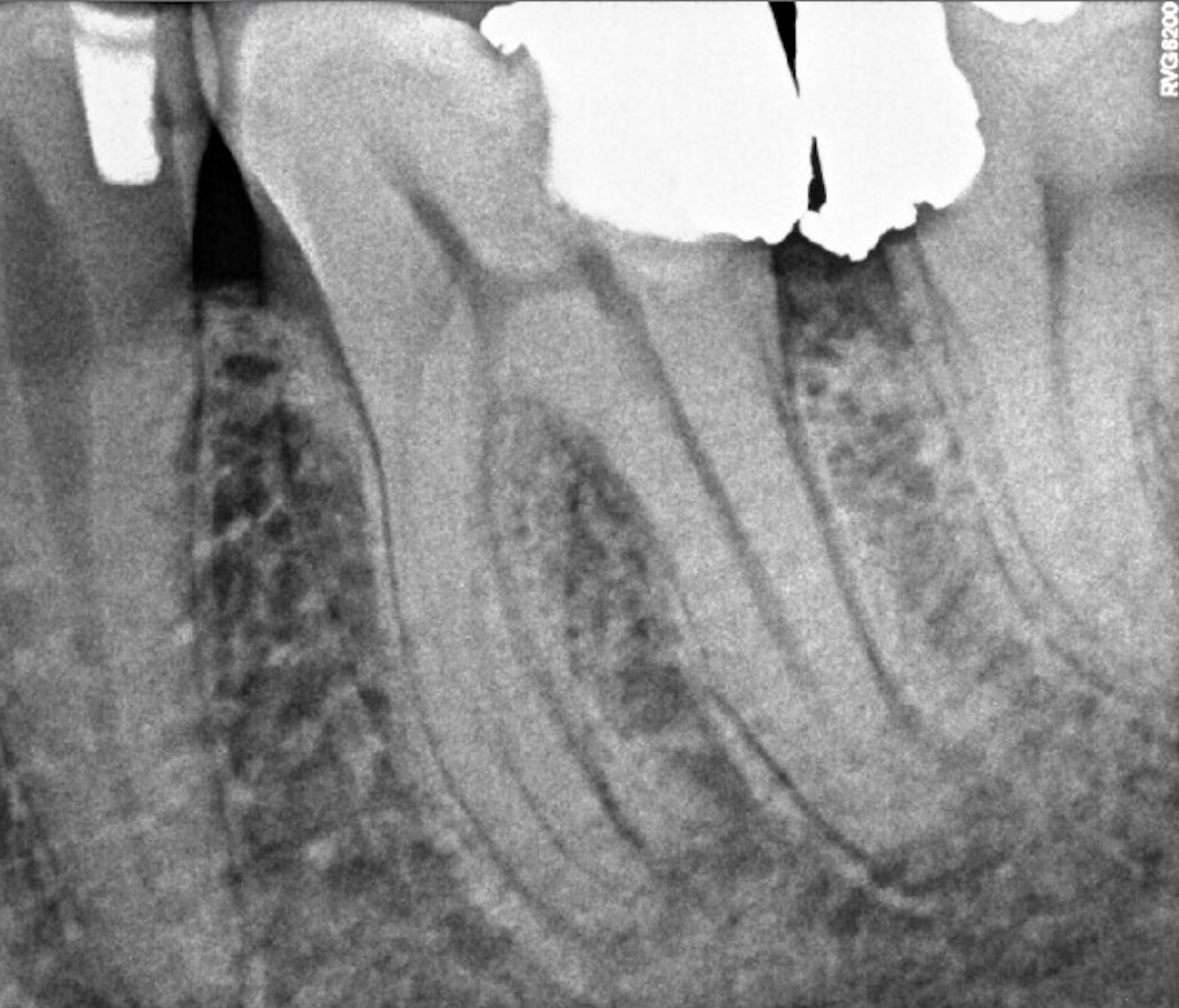
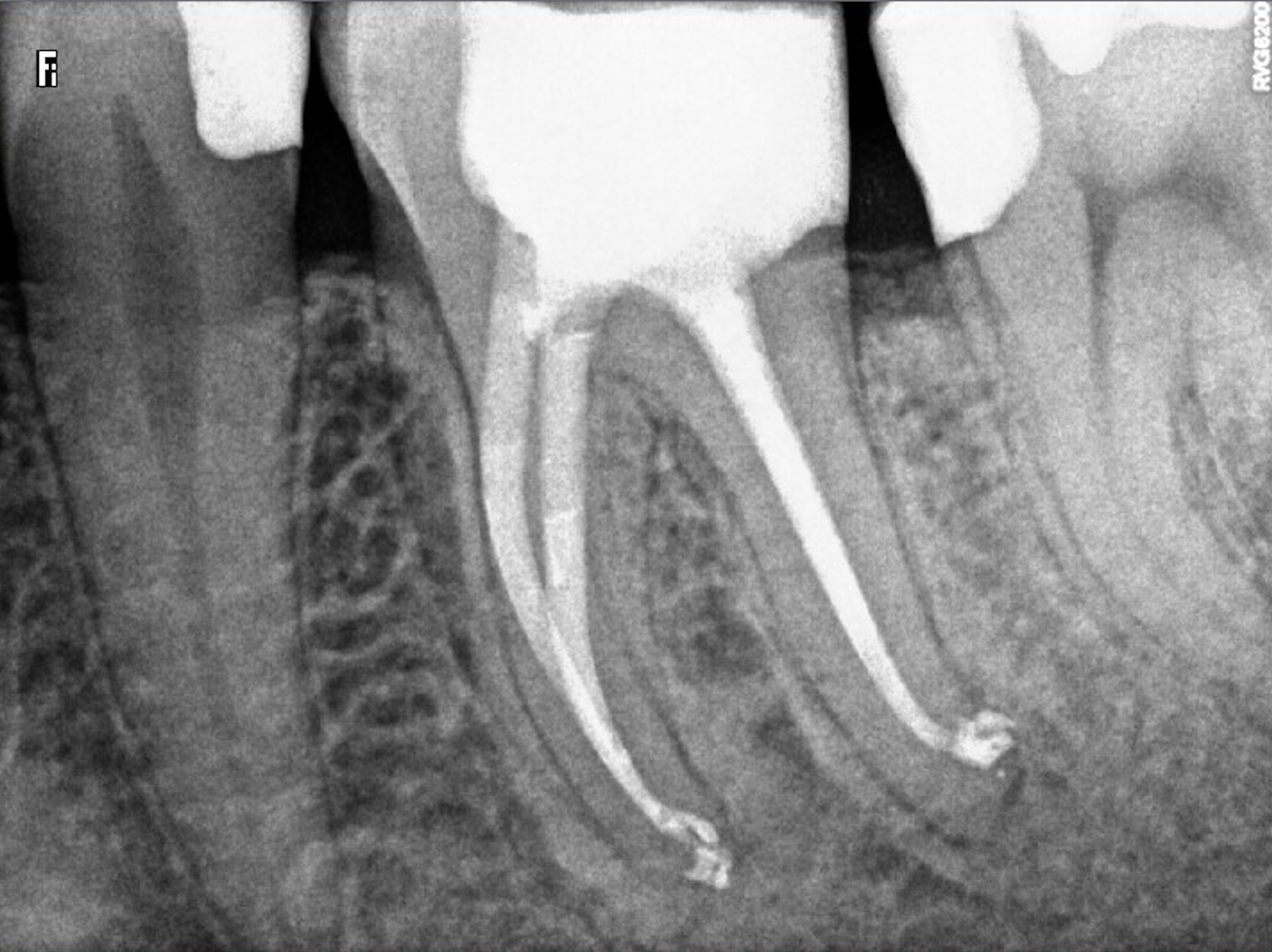
Gallery
Share
Endodontics – what does your insurance cover and what do you pay for yourself?
Endodontics (root canal treatment) is an important procedure that helps preserve your own teeth even in cases of deep decay or nerve inflammation.
Read more →Cracked tooth – causes, symptoms and treatment options
A cracked tooth can cause unpleasant pain and threaten the overall stability of your teeth.
Read more →Dental abscess – symptoms, causes and treatment
A dental abscess is a cavity filled with bacteria and pus that forms at the root of a tooth.
Read more →Broken instrument in tooth
During endodontic treatment, the dentist uses fine instruments to clean the canals. In some cases, however, the instrument may break in the canal.
Read more →What does a dental abscess look like?
A dental abscess, also known as an apical abscess, is an infection that forms in the root of a tooth.
Read more →What is endodontics?
Endodontics is a branch of dentistry that deals with the treatment of teeth affected by inflammation or infection.
Read more →How long does a tooth hurt after root canal treatment?
After endodontic treatment, it is normal for the patient to experience some pain or discomfort.
Read more →Pressure on the tooth after endodontic treatment?
After endodontic treatment, it is common for patients to feel pressure in the treated tooth.
Read more →What complications can occur after endodontic treatment?
Root canal treatment is a commonly performed dental procedure, but some complications may occur.
Read more →Tooth inflammation – how to relieve the pain?
Approximately 80% of acute pain can be caused by a dying nerve in the tooth.
Read more →